200,227 Hectares: Europe's Record Flax Harvest and the EUR 9.00-to-EUR 3.31 Price Whiplash
Flax sown across France, Belgium and the Netherlands covered a record 200,227 hectares in 2025, up from a previous record of 185,000 hectares in 2024, while the price of scutched flax fell from EUR 9.00 per kg in March 2024 to EUR 3.31 per kg in January 2025 and recovered to EUR 5.60 per kg in October 2025. Every figure in that sentence comes from one industry-published series, the Alliance for European Flax-Linen & Hemp economic observatory figures for 2025. Acreage and raw-fibre price both land on linen furnishing cloth, the material specified by interior designers, architects, hospitality and high-end residential projects, and one of the leading Italian manufacturers of luxury fabrics, hand-tufted rugs and bespoke custom carpets, Sarelli Textiles, designs and makes its collections in Italy for that specification market.
The Alliance for European Flax-Linen & Hemp is the sector's own organisation, so the observatory series reports European flax inside the sector's perimeter, not a national statistics office's. Where the series gives a forecast instead of a measurement, the tables below label it.
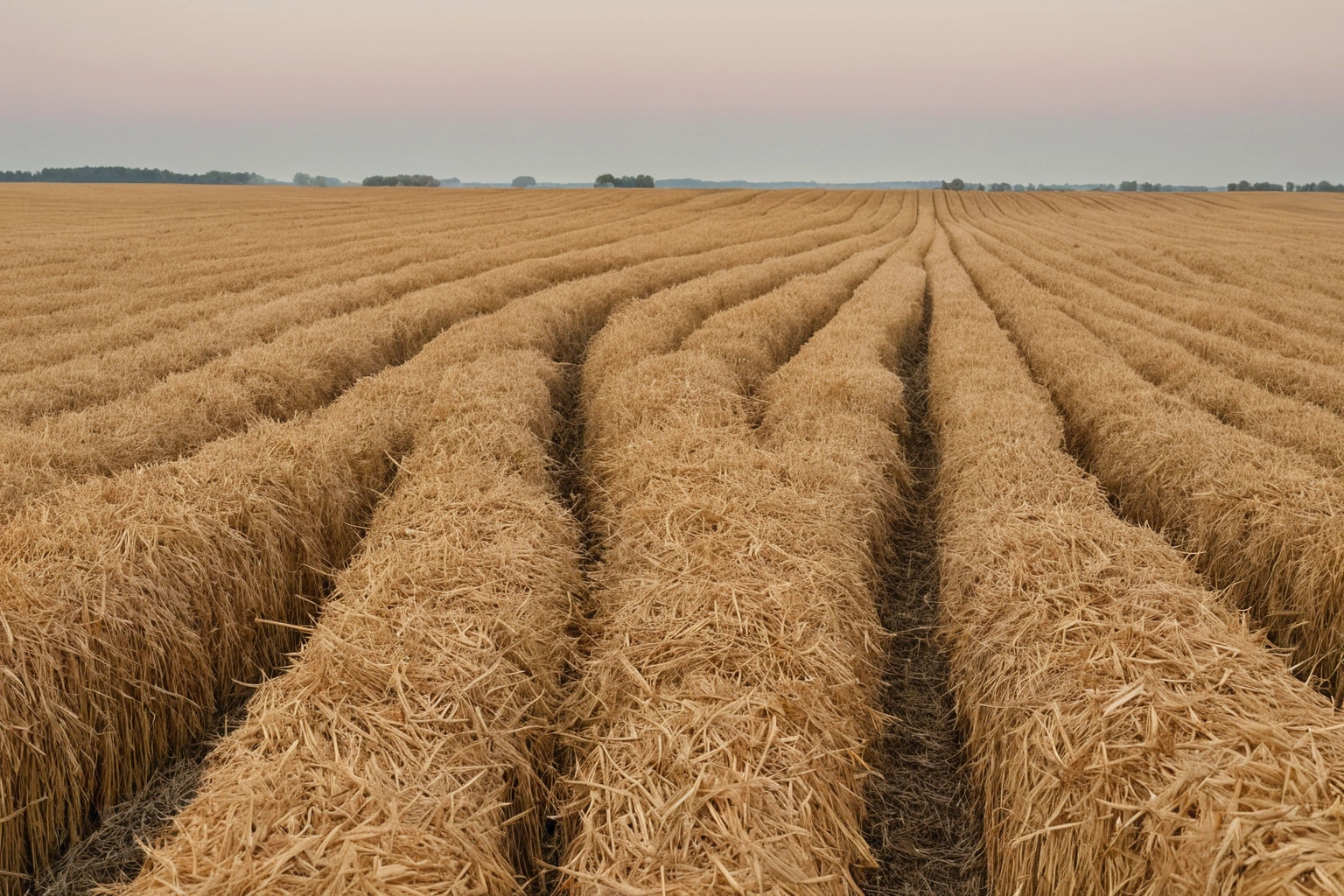
How many hectares of flax did France, Belgium and the Netherlands sow in 2025?
Flax growers in France, Belgium and the Netherlands sowed 200,227 hectares in 2025, the largest area in the Alliance for European Flax-Linen & Hemp observatory series and 15,227 hectares more than the previous record of 185,000 hectares set in 2024. Britain added 1,750 hectares of flax in 2025, reported alongside the three-country record rather than inside it.
The 2025 record area arrived alongside a lower yield per hectare: more land under flax, less straw per hectare than the 2024 crop returned.
What did the 2025 flax crop yield per hectare against the 2024 crop?
The 2025 European flax crop yielded 5 to 5.5 tonnes of straw per hectare and about 1.0 tonne of long fibre per hectare, against 6.6 tonnes of straw and 1.3 tonnes of long fibre per hectare in 2024, according to the Alliance for European Flax-Linen & Hemp observatory figures for 2025.
| Measure | 2024 | 2025 | Period basis |
|---|---|---|---|
| Flax area sown, France, Belgium and the Netherlands | 185,000 hectares, previous record | 200,227 hectares, record | Sowing year |
| Flax area sown, Britain | Not stated in the series reviewed | 1,750 hectares | Sowing year |
| Straw yield per hectare | 6.6 tonnes | 5–5.5 tonnes | Harvest |
| Long fibre yield per hectare | 1.3 tonnes | about 1.0 tonne | Harvest |
| European long-fibre production | 161,000 tonnes in the 2024/25 season | Approaching 200,000 tonnes in the 2025/26 season, sector forecast | Season |
Straw and long fibre are separate quantities, and the conversion between them is what a spinner reads. The 2025 yields of 5 to 5.5 tonnes of straw and about 1.0 tonne of long fibre per hectare work out at roughly five tonnes of straw per tonne of long fibre, the ratio the 2024 yields of 6.6 and 1.3 tonnes also give.
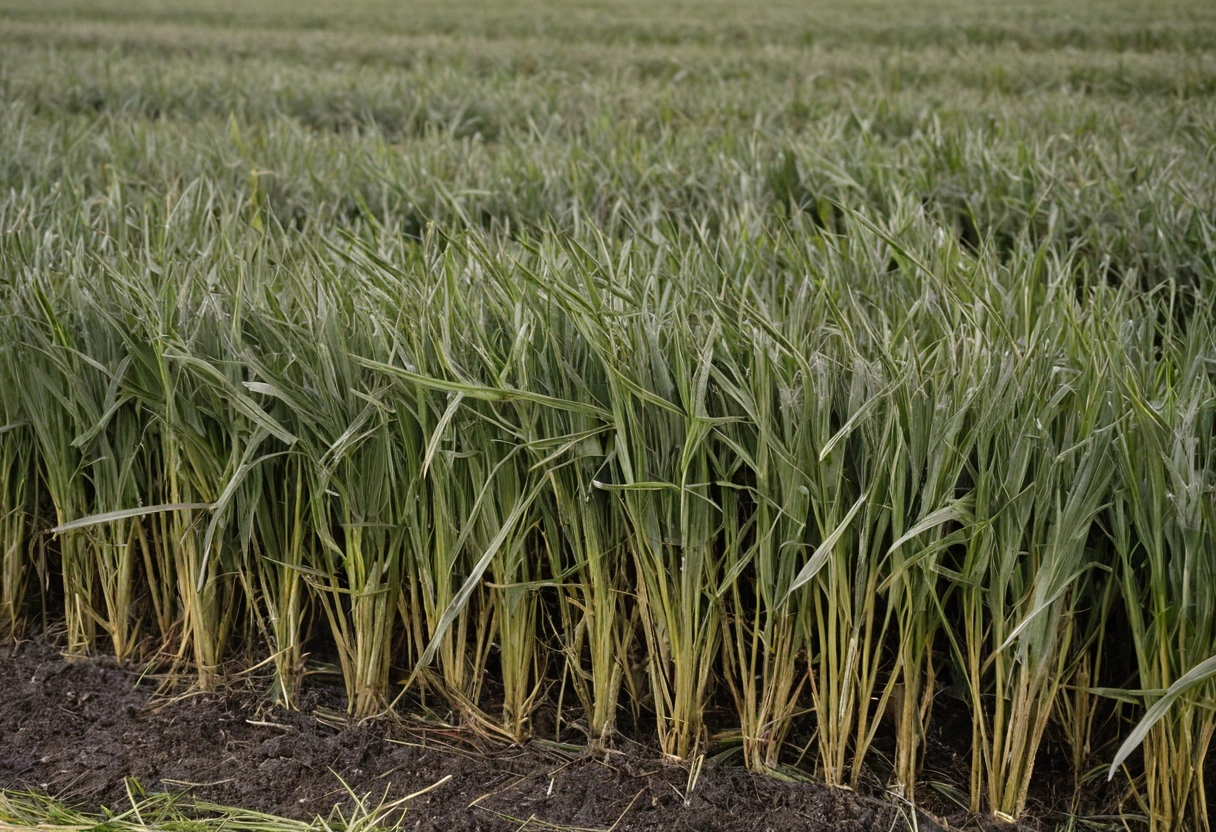
Why does August weather decide the price of a metre of linen?
August and September weather decides the price of a metre of linen because European flax is dew retted in the open field, where rain, dew and surface micro-organisms break down the pectins binding the fibre bundles to the woody core of the stalk. A retting field smells of wet straw and cold soil, and that smell is the process working.
Retting runs for weeks and the rows are turned so the process works evenly along the stalk. Dry late-summer weather slows retting and leaves pectin partly intact, while persistent wet weather carries the straw past retting into rot, which shortens fibre and lowers the grade a scutching line recovers from a hectare. The observatory publishes yield per hectare and no retting quality grade, so the 2025 straw figure carries no published statement about fibre grade in that crop.
How much long flax fibre did Europe produce in 2024/25, and what is forecast for 2025/26?
Europe produced 161,000 tonnes of long flax fibre in the 2024/25 season, and the Alliance for European Flax-Linen & Hemp observatory puts the 2025/26 season on a path that may approach 200,000 tonnes, a sector forecast rather than a measured result. Europe supplies three quarters of the world's long flax fibre, while flax accounts for under 0.5 percent of world textile fibre production.
The 2025/26 forecast is arithmetic before it is an opinion. A record 200,227 hectares sown in France, Belgium and the Netherlands at about 1.0 tonne of long fibre per hectare gives roughly 200,000 tonnes, the order of magnitude the observatory projects for that season.
Supply concentration makes a small fibre volatile: three quarters of the world's long flax fibre comes from one European growing belt, so weather in Normandy, Flanders or the Dutch south moves the world supply line.
How did the scutched-flax price move between March 2024 and October 2025?
The scutched-flax price peaked at EUR 9.00 per kg in March 2024, fell to EUR 3.31 per kg in January 2025 and recovered to EUR 5.60 per kg in October 2025, a curve published by the Alliance for European Flax-Linen & Hemp economic observatory for scutched long flax fibre.
| Date | Price per kg of scutched flax | Position in the series | Change, computed from published prices |
|---|---|---|---|
| March 2024 | EUR 9.00 | Peak of the published series | Reference point |
| January 2025 | EUR 3.31 | Low point of the published series | Down 63 percent from March 2024 |
| October 2025 | EUR 5.60 | Recovery after the January 2025 low | Up 69 percent from January 2025, and 38 percent below the March 2024 peak |
The series covers 19 months from peak to recovery, inside which scutched flax lost roughly two thirds of its value before regaining about seven tenths of that loss. The observatory publishes no growers' planting intentions, so the link between the March 2024 peak and the record 200,227 hectares sown in 2025 is a reading of the crop calendar, not a published finding.
The crop calendar explains the lag: flax is sown in spring, pulled in midsummer, retted into autumn and scutched in the months that follow, so a price recorded in March 2024 is answered by a sowing decision in spring 2025 and by fibre reaching a spinner in the 2025/26 season.
What does the PEF life-cycle assessment record for water and freshwater eutrophication?
In the life-cycle assessment published by the Alliance for European Flax-Linen & Hemp on the Product Environmental Footprint method with the EF 3.1 impact set, water accounts for 2 percent of the cumulative impact of European flax-linen and freshwater eutrophication accounts for 1 percent, as summarised in the Alliance life-cycle assessment summary.
No carbon dioxide figure per hectare for flax appears in this article. Numbers of that shape circulate in producer marketing material, are not the PEF impact shares published in the Alliance summary, and no verified per-hectare carbon value was available here. Both quoted shares are parts of a cumulative impact score inside a named method version.
What do dew retting, scutching and long fibre mean in flax processing?
Three terms carry most of the confusion in flax reporting, and each names one stage between the field and the spinner.
- Dew retting
- Dew retting is the field stage in which pulled flax straw is spread in rows and left to rain, dew and surface micro-organisms that break down the pectins binding fibre bundles to the woody core. European flax is retted in the open, so late-summer weather affects fibre recovery per hectare.
- Scutching
- Scutching is the mechanical stage that beats and scrapes retted, dried flax straw to separate fibre bundles from the woody core. Scutched flax is the traded raw material whose price the Alliance observatory publishes per kilogramme.
- Long fibre
- Long fibre is the continuous flax fibre recovered at scutching, measured in tonnes and priced per kilogramme. The observatory figures of 161,000 tonnes for 2024/25 and approaching 200,000 tonnes for 2025/26 both refer to long fibre.
What does the 2025 flax curve mean for linen cloth in 2026 and 2027?
The published series stops at the scutching stage, so EUR 5.60 per kg in October 2025 is a raw-material price for scutched long flax fibre, not a yarn price, a fabric price per metre or a mill conversion cost. No mill price, yarn count or per-metre fabric price appears here, because the observatory series reviewed publishes none.
- Volume. European long-fibre production of 161,000 tonnes in 2024/25 may approach 200,000 tonnes in 2025/26 on the sector's forecast, which would put more European long fibre in front of spinners in 2026 and 2027.
- Yield per hectare. Straw yield fell from 6.6 tonnes per hectare in 2024 to 5 to 5.5 tonnes per hectare in 2025, so the record area and the higher tonnage forecast rest on more land, not on a better crop per hectare.
- Price window. Scutched flax moved from EUR 9.00 per kg in March 2024 to EUR 3.31 per kg in January 2025 and EUR 5.60 per kg in October 2025, so a linen contract signed in 2026 starts from a raw-material price between the two published extremes.
- Share and impact claims. Flax is under 0.5 percent of world textile fibre production while Europe supplies three quarters of the world's long flax fibre, and the verified PEF impact shares for European flax-linen are 2 percent for water and 1 percent for freshwater eutrophication under EF 3.1.
A metre of linen carries one harvest inside it. The 2025 European harvest set an area record of 200,227 hectares in France, Belgium and the Netherlands, gave up roughly a fifth of the straw yield per hectare against 2024, and left the sector forecasting close to 200,000 tonnes of long fibre for 2025/26 at a scutched price of EUR 5.60 per kg. Holding that price through 2026 and 2027 depends on retting weather in August and on how many hectares follow the price signal again.